How to Winterize Your Pool: Step-by-Step Guide for Every Pool Type (Concrete, Vinyl, Fiberglass)
How to Winterize Your Pool: Step-by-Step Guide for Every Pool Type (Concrete, Vinyl, Fiberglass)
Winterizing your pool isn’t just about saving money—it’s about protecting a $50,000+ investment from freeze damage, algae blooms, and structural cracks. In 2025, the process has become more precise, thanks to smart test kits, eco-friendly covers, and chemical stabilizers that last all season.
How to Winterize Your Pool
But one-size-fits-all advice won’t cut it. A concrete pool in Minnesota needs a different approach than a vinyl liner in North Carolina—or a fiberglass shell in Germany.
In this comprehensive, step-by-step guide, we break down exactly how to winterize every type of inground and above-ground pool, with region-specific tips, a printable checklist, and warnings about the 3 most common (and costly) mistakes homeowners make every fall.
Why Winterizing Matters: The Cost of Skipping It
If you live in an area where temperatures drop below 32°F (0°C) for more than a few days, water inside your pipes, pump, and filter can freeze—and expand. This can cause:
- Cracked filter tanks ($300–$800 to replace)
- Burst plumbing lines (up to $2,000 in repairs)
- Collapsed pool liners from ice pressure
- Spring algae outbreaks that cost $500+ to fix
Proper winterizing costs $150–$400 in chemicals and supplies—but prevents thousands in damage.
How to Winterize Your Pool
When to Winterize: Timing by Climate Zone
Don’t wait for the first frost. Winterize when water temps consistently drop below 60°F (15°C):
- Northern U.S. / Canada: Late September – Mid October
- Midwest / Northeast: Early – Late October
- Southern U.S. (TX, NC): November – Early December (partial winterizing)
- Europe (Germany, UK, France): October – November
⚠️ Never winterize when water is above 65°F—algae can still grow under the cover!
Essential Winterizing Supplies Checklist
Gather these before you start:
- Pool test kit (or digital meter)
- Chlorine shock (calcium hypochlorite)
- Algaecide (polyquat 60% preferred)
- Winterizing chemical kit (includes antifreeze, pH balancer)
- Air compressor or shop vac (for blowing lines)
- Pool plug set (expandable rubber plugs)
- Winterizing antifreeze (non-toxic, propylene glycol)
- Skimmer bottle or Gizzmo
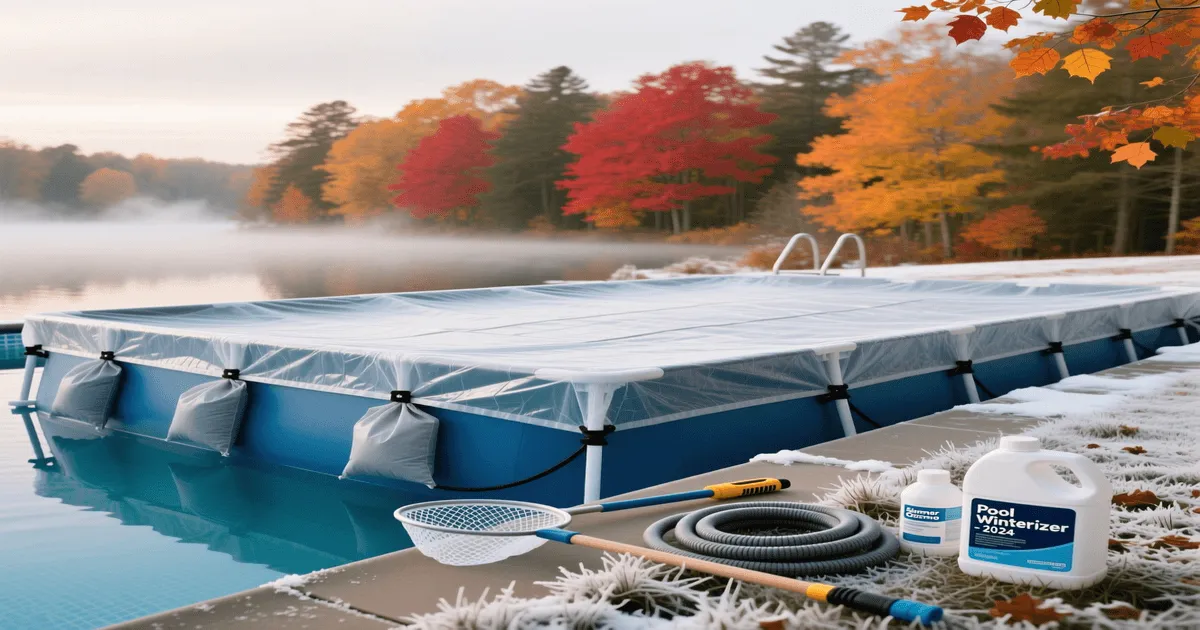
- Winter pool cover (solid or mesh, with water bags or automatic reel)
- Brush and vacuum (for final clean)
How to Winterize Your Pool
Step-by-Step Winterizing Process (All Pool Types)
Step 1: Deep Clean the Pool
- Brush walls, floor, and steps to remove biofilm.
- Vacuum all debris.
- Clean skimmer and pump baskets.
Step 2: Balance Water Chemistry
Test and adjust to these levels:
- pH: 7.2 – 7.6
- Total Alkalinity: 80 – 120 ppm
- Calcium Hardness: 200 – 400 ppm
- Chlorine: 1 – 3 ppm
Unbalanced water can stain or etch surfaces over winter.
Step 3: Shock and Add Algaecide
- Add a double dose of chlorine shock (2 lbs per 10,000 gallons).
- Wait 4–6 hours, then add 16 oz of polyquat algaecide (non-foaming, metal-free).
- Run pump 8–12 hours to circulate.
Step 4: Lower Water Level
How much to drain depends on your cover type:
- Solid cover: Lower water 3–6 inches below the skimmer.
- MesH cover: Lower to mid-skimmer level (water supports cover under snow).
Step 5: Drain and Blow Out Equipment
- Turn off the power at the breaker.
- Open the pump strainer and drain.
- Remove drain plugs from pump, filter, and heater.
- Use an air compressor to blow water out of all lines (20–30 PSI max).
- Plug returns, skimmers, and main drain with expandable plugs.
Step 6: Add Antifreeze (Non-Toxic Only!)
- Pour 1–2 gallons of propylene glycol antifreeze into the skimmer and pump lines.
- Never use automotive antifreeze—it’s toxic!
Step 7: Install Skimmer Protection
- Place a skimmer bottle (plastic jug filled with pebbles) or Gizzmo inside the skimmer to absorb ice expansion.
Step 8: Cover the Pool
- Stretch the cover tightly.
- Secure with water bags (or automatic reel).
- Leave 2–4 inches of slack in the center for rain/snow.
How to Winterize Your Pool
Special Instructions by Pool Type
Concrete (Gunite) Pools
- Ensure water level is below tile line to prevent freeze-thaw spalling.
- Use extra algaecide—porous surfaces harbor algae spores.
- Check for cracks before closing; repair them in the spring if needed.
Vinyl Liner Pools
- Never over-drain—the liner can shrink or tear.
- Keep the water level just below the skimmer.
- Use only vinyl-safe algaecide (no copper!)
- Place air pillows under the cover to prevent water pooling.
Fiberglass Pools
- Drain to mid-skimmer.
- No special chemical needs—smooth surface resists algae.
- Ensure cover doesn’t rub against the coping (can scratch gelcoat).
Above-Ground Pools
- Use a cover pump to remove rainwater weekly.
- Install an air pillow in the center to prevent the cover from collapsing.
- Disconnect and store the pump/filter indoors.
What NOT to Do: 3 Costly Winterizing Mistakes
- Skipping algaecide to save $20 → Leads to $500+ green pool in spring.
- Using automotive antifreeze → Toxic to pets, kids, and pool surfaces.
- Leaving water in the pump basket → Guaranteed cracked housing after the first freeze.
How to Winterize Your Pool
Spring Opening Tip: Keep This List Handy
Store this checklist in your phone or garage:
- Remove the cover and clean
- Refill water to mid-skimmer
- Reconnect equipment
- Prime and start the pump
- Test and balance the water
- Run system 24–48 hours before swimming
How to Winterize Your Pool
Frequently Asked Questions (FAQ)
Can I winterize my pool myself?
Yes! 80% of homeowners do it successfully. Just follow this guide and take your time.
Do I need to winterize in Florida or Southern California?
No full winterizing—but do a “soft close”: reduce pump runtime, add extra algaecide, and clean monthly.
How much does professional winterizing cost?
$150–$350 in most U.S. regions. DIY costs $100–$200 in supplies.
Can I use my pool heater during winter?
Only if you’re keeping the pool open. Once winterized, never run the heater—it can crack without water flow.
Final Recommendation
Winterizing is the single most important maintenance task for cold-climate pool owners. Take a full weekend, follow these steps, and you’ll open to a clean, clear pool next spring—without surprise repair bills.
At YAHYA STORE, we offer complete winterizing kits with non-toxic antifreeze, premium algaecide, and heavy-duty covers—tested in U.S. and European winters.
Don’t gamble with your pool. Prepare it right—and enjoy peace of mind all winter long.
How to Winterize Your Pool