The Complete Guide to Pool Automation Systems in 2025
The Complete Guide to Pool Automation Systems in 2025: Control Pumps, Lights & Chemistry from Your Phone
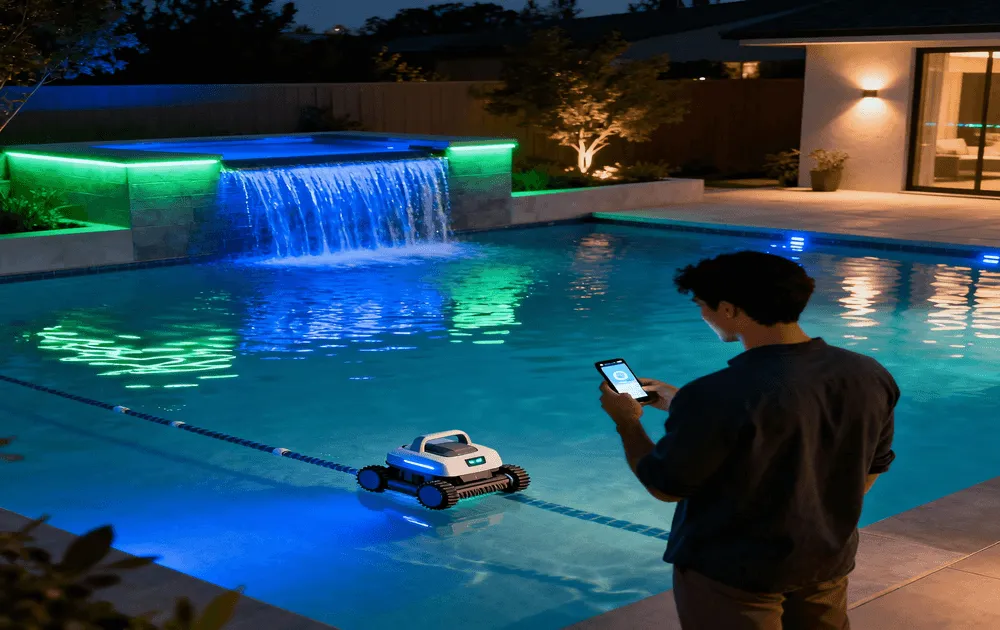
Imagine this: You’re lying on the couch, and with a tap on your phone, your pool lights glow turquoise, the heater kicks on, the waterfall starts flowing, and the robot cleaner begins its cycle—all while you sip your coffee. In 2025, this isn’t science fiction. It’s pool automation, and it’s transforming backyard pools into smart, energy-efficient oases.
But with systems like Pentair IntelliConnect, Hayward OmniLogic, Jandy AquaLink, and iAquaLink flooding the market, how do you choose the right one? And more importantly, is it worth the investment?
In this definitive 2025 guide, we break down how pool automation works, compare the top 5 systems head-to-head, reveal real installation costs, and show you exactly how to future-proof your pool—whether you’re building new or upgrading an existing one.
Pool Automation Systems in 2025
What Is Pool Automation? (And Why It’s a Game-Changer)
Pool automation is a centralized control system that lets you manage your pool’s equipment—pump, heater, lights, cleaner, water features, and even chemical dosing—from a wall-mounted panel, smartphone app, or voice assistant.
Beyond convenience, automation delivers real value:
- Energy savings: Run your pump only when needed (e.g., 4 hours at night vs. 8 all day).
- Equipment protection: Prevent freeze damage by auto-activating the pump in cold weather.
- Remote monitoring: Receive alerts if the water temperature drops or the pH level goes out of range.
- Enhanced safety: Turn off the spa heater remotely if kids are unsupervised.
Core Components of a 2025 Pool Automation System
Every system includes these key parts:
1. Control Panel (The “Brain”)
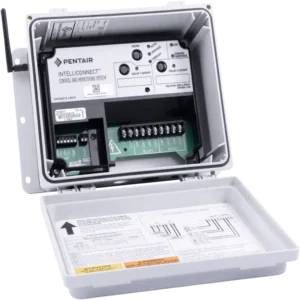
Mounted near your equipment pad, it connects to all devices via low-voltage wiring. Modern panels support Wi-Fi and cloud connectivity.
2. Relay Modules
These switch high-voltage equipment (pump, heater) on/off based on commands from the panel.
3. Sensors (Optional but Powerful)
- Temperature sensors: For pool, spa, and air.
- Water chemistry monitors: Real-time pH and ORP (e.g., Pentair IntelliChem).
- Flow sensors: Detect clogs or pump failure.
4. Mobile App & Cloud Platform
This is where the magic happens. Top apps let you:
- Create custom “scenes” (e.g., “Movie Night”: dim lights, turn on the waterfall)
- Schedule equipment cycles
- Receive maintenance alerts
- View energy usage reports
Pool Automation Systems in 2025
Top 5 Pool Automation Systems of 2025 Compared
1. Pentair IntelliConnect – Best Overall for New Builds
Price: $1,800 – $2,500 (system only) | App Rating: 4.7/5
Pentair’s cloud-based system works with any Pentair equipment (and some third-party devices via relays). Its standout feature? IntelliChem integration—it auto-doses acid and chlorine based on real-time water tests.
Pros: Sleek app, excellent diagnostics, and support for Alexa/Google Assistant.
Cons: Requires the Pentair ecosystem for full functionality.
2. Hayward OmniLogic – Best for Customization & Large Pools
Price: $2,200 – $3,200 | App Rating: 4.5/5
OmniLogic is modular—you start with a base unit and add modules for extra pumps, lights, or water features. Perfect for estates with multiple pools, spas, and fountains.
Pros: Highly scalable, color touchscreen panel, robust third-party support.
Cons: Steeper learning curve; professional programming recommended.
3. Jandy AquaLink RS – Best for Simplicity & Reliability
Price: $1,500 – $2,000 | App Rating: 4.3/5
AquaLink has been the contractor’s choice for 20+ years. The RS model adds full Wi-Fi control. It’s less flashy but bulletproof and reliable.
Pros: Easy setup, works with most brands, lifetime panel warranty.
Cons: App feels dated; no advanced chemistry control.
4. iAquaLink 3.0 – Best Budget Smart Option
Price: $999 – $1,400 | App Rating: 4.6/5
iAquaLink is Jandy’s streamlined, app-first system. No wall panel needed—control everything from your phone. Ideal for retrofits.
Pros: Affordable, easy DIY install, great app.
Cons: Limited to 4–6 devices; not for complex setups.
5. SmartPool (by Control4) – Best for Full Smart Home Integration
Price: $3,000+ | App Rating: 4.8/5
If your home runs on Control4, Crestron, or Savant, SmartPool integrates pool control into your whole-home system. Say “Goodnight” and your pool turns off with your lights.
Pros: Seamless smart home experience.
Cons: Expensive; requires a certified installer.
Performance Comparison Table
| System | Price Range | App Quality | Chemistry Control | DIY Install? | Best For |
|---|---|---|---|---|---|
| Pentair IntelliConnect | $1,800–$2,500 | Excellent | ✅ Full (with IntelliChem) | Partial | New builds, tech-savvy owners |
| Hayward OmniLogic | $2,200–$3,200 | Very Good | ❌ (basic only) | No | Large/custom pools |
| Jandy AquaLink RS | $1,500–$2,000 | Good | ❌ | Yes (basic) | Reliability-focused owners |
| iAquaLink 3.0 | $999–$1,400 | Excellent | ❌ | ✅ Yes | Retrofits, small pools |
| SmartPool (Control4) | $3,000+ | Excellent | Limited | No | Luxury smart homes |
Pool Automation Systems in 2025
Can You Retrofit an Old Pool?
Yes! Most systems work with existing equipment via relay integration. You’ll need:
- A 220V electrical subpanel near your equipment
- Low-voltage wiring to each device
- Wi-Fi signal at the equipment pad (use a mesh extender if needed)
Typical retrofit cost: $1,200 – $2,500 (including labor).
Installation: DIY vs. Professional?
- DIY-Friendly: iAquaLink, basic AquaLink. If you’re comfortable with wiring and 220V circuits, you can save $500–$1,000.
- Professional Recommended: Pentair, Hayward OmniLogic. Complex programming and high-voltage work require certification.
⚠️ Warning: Incorrect wiring can void equipment warranties or cause safety hazards. When in doubt, hire a licensed pool electrician.
Smart Home Integration: Alexa, Google & Siri
All top 2025 systems support voice control:
- “Alexa, set pool temperature to 82.”
- “Hey Google, turn on spa lights.”
- “Siri, start the pool cleaner.”
For full integration, ensure your system supports IFTTT or native voice assistant APIs (Pentair and Hayward do).
Future-Proofing Your Pool: What to Install Now
If you’re building new, wire for the future—even if you don’t automate today:
- Run conduit from the equipment pad to the house.
- Install a 220V subpanel with extra breaker slots.
- Pre-wire for 4–6 low-voltage zones (lights, features, sensors).
- Choose equipment with automation-ready ports (most modern pumps/heaters have them).
Pool Automation Systems in 2025
Frequently Asked Questions (FAQ)
Do I need a new pump to use automation?
No—but a variable-speed pump (like Pentair IntelliFlo) unlocks the biggest energy savings when paired with automation.
Can automation control saltwater chlorinators?
Yes! Systems like Pentair and Hayward can turn chlorinators on/off or adjust output based on runtime or water tests.
What if my Wi-Fi goes down?
The wall panel still works locally. Cloud features (remote access) pause until the connection returns.
Is there a monthly fee?
No. All major systems offer free cloud access in 2025 (unlike early models that charged $50/year).
Final Recommendation
For most homeowners in 2025, the iAquaLink 3.0 offers the best balance of price, ease of use, and smart features—especially for retrofits. If you’re building new and want full chemistry control, go with Pentair IntelliConnect.
Pool Automation Systems in 2025
Remember: automation isn’t just about convenience. It’s about protecting your investment, saving energy, and enjoying your pool more with less effort.
At YAHYA STORE, we supply certified automation components compatible with all major brands—backed by U.S. and EU technical support.
Ready to turn your pool into a smart oasis? Explore our 2025 Automation Starter Kits—engineered for seamless control, built to last.
Pool Automation Systems in 2025