How to Choose the Right Pool Filter
How to Choose the Right Pool Filter: Sand, Cartridge & DE Filters Explained (2025 Guide)
Your pool filter is the unsung hero of crystal-clear water. But with three main types—sand, cartridge, and diatomaceous earth (DE)—choosing the right one can feel overwhelming. Each has unique strengths in filtration quality, maintenance effort, water usage, and long-term cost.
How to Choose the Right Pool Filter
In 2025, the “best” filter isn’t universal—it depends on your pool size, surface type, climate, and willingness to maintain it.
In this detailed, expert-backed guide, we compare real-world performance, cleaning routines, and total ownership costs for all three filter types—so you can select the system that keeps your water pristine with the least hassle.
How Pool Filters Work: The Core Principle
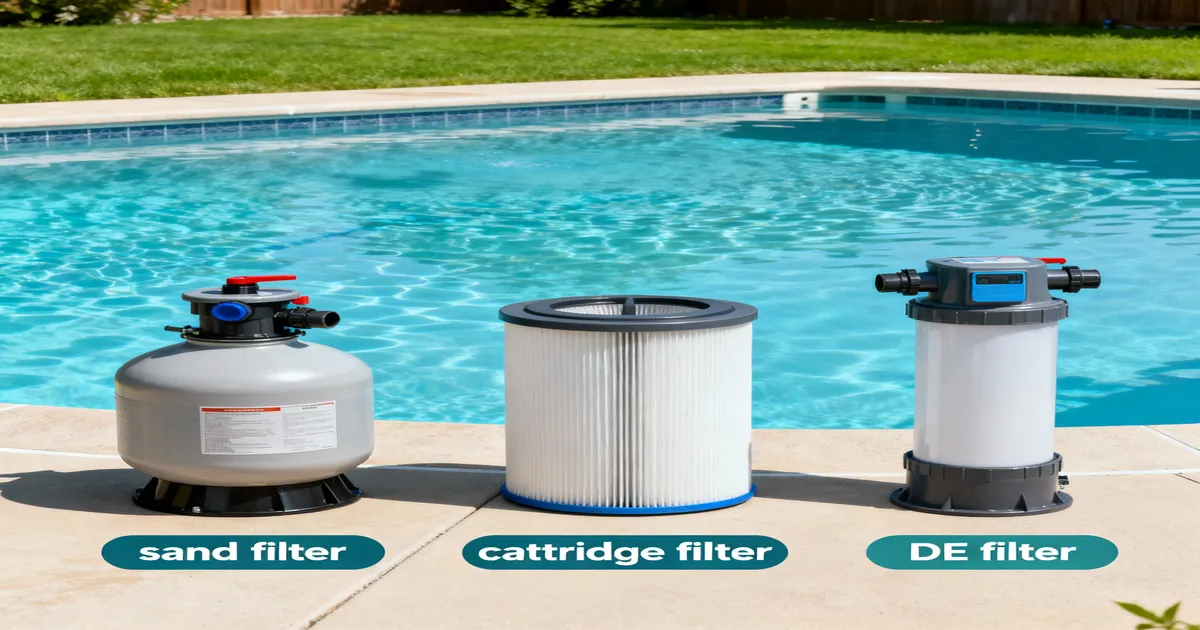
All filters clean water by forcing it through a medium that traps debris. The key difference? Particle size they capture:
- Sand filters: Trap particles down to 20–40 microns
- Cartridge filters: Trap particles down to 10–20 microns
- DE filters: Trap particles down to 2–5 microns (finest available)
For reference, a human hair is about 70 microns thick.
Sand Filters: The Classic, Low-Maintenance Choice
How It Works
Water flows through a tank filled with special-grade silica sand. Debris sticks to the sand grains.
Pros
- Low upfront cost: $300–$800
- Simple maintenance: Backwash in 5 minutes (no disassembly)
- Durable: Tanks last 10–15 years
- Forgiving: Handles high debris loads (e.g., leafy yards)
Cons
- Coarse filtration: Water looks “clean” but isn’t crystal clear
- Wastes water: Backwashing uses 200–500 gallons per cycle
- Sand replacement: Every 5–7 years ($50–$100)
Best For
- Large pools (20,000+ gallons)
- Areas with water restrictions (ironically, due to infrequent cleaning)
- Homeowners who hate maintenance
How to Choose the Right Pool Filter
Cartridge Filters: The Middle Ground for Clarity & Convenience
How It Works
Water passes through pleated polyester cartridges that trap fine particles.
Pros
- Better clarity: Cleaner than sand, almost as good as DE
- No backwashing: Zero water waste
- Quiet operation: No valve noise
- Energy efficient: Lower pressure = less pump strain
Cons
- Manual cleaning: Remove and hose off cartridges every 4–6 weeks
- Cartridge replacement: Every 1–2 years ($80–$200)
- Not ideal for heavy debris: Clogs faster than sand
Best For
- Medium pools (10,000–20,000 gallons)
- Drought-prone areas (CA, AZ, Spain)
- Vinyl or fiberglass pools (gentler on surfaces)
DE Filters: The Premium Choice for Crystal-Clear Water
How It Works
A grid coated with diatomaceous earth (fossilized algae) acts as a microscopic sieve.
Pros
- Superior filtration: Removes bacteria, pollen, and fine silt
- Water clarity: Spa-like sparkle
- Efficient: Long cycles between cleanings
Cons
- High maintenance: Backwash + re-coat with DE powder monthly
- DE powder cost: $20–$40 per cleaning
- Banned in some cities: Due to DE discharge into sewers (check local codes)
- Fragile grids: Can tear if mishandled
Best For
- Small to medium pools where clarity is a priority
- Allergy sufferers (remove pollen)
- Owners were willing to do monthly maintenance
Performance & Cost Comparison Table (2025)
| Filter Type | Filtration (Microns) | Upfront Cost | Annual Maintenance | Water Waste | Lifespan |
|---|---|---|---|---|---|
| Sand | 20–40 | $300–$800 | $20–$50 | High (backwash) | 10–15 years |
| Cartridge | 10–20 | $400–$1,000 | $80–$200 | None | 5–10 years (cartridges replaced) |
| DE | 2–5 | $600–$1,500 | $100–$300 | Moderate (backwash) | 8–12 years |
How to Choose Based on Your Pool Type
Concrete (Gunite) Pools
- Can handle any filter type
- DE recommended for maximum clarity on plaster finishes
Vinyl Liner Pools
- Avoid DE: Backwashing can create suction that wrinkles the liner
- Best: Cartridge (gentle, no backwash)
Fiberglass Pools
- Cartridge is ideal—matches smooth surface aesthetic
- Sand is acceptable if the budget is tight
Above-Ground Pools
- Almost always come with small sand filters
- Upgrade to a cartridge if you want clearer water and less water waste
Maintenance Deep Dive: What to Expect
Sand Filter
- Weekly: Check pressure gauge
- When pressure rises 8–10 PSI: Backwash (turn valve, run pump 2 mins)
- Annually: Replace sand if the water stays cloudy
Cartridge Filter
- Monthly: Remove cartridges, rinse with hose
- Every 6 months: Soak in filter cleaner to remove oils
- When flow drops: Replace cartridges
DE Filter
- Monthly: Backwash, then add fresh DE powder through the skimmer
- Annually: Disassemble and clean grids thoroughly
- Tip: Use a DE sock to prevent powder from entering the pool
💡 Pro Tip: Pair your filter with a robotic cleaner to reduce debris load and extend filter cycles.
Climate & Water Restrictions Matter
- Drought areas (CA, AZ, Spain): Cartridge is best—no backwashing.
- Humid, rainy climates (FL, Gulf Coast): Sand handles algae blooms better.
- Cold climates: All types work, but DE requires careful winterizing to avoid cracked grids.
For full winter prep, see our step-by-step guide.
Frequently Asked Questions (FAQ)
Can I switch filter types?
Yes, but it requires replumbing and often a new pump. Consult a professional.
Which filter works best with saltwater pools?
All three work, but the cartridge is preferred—less corrosion risk than sand tanks with metal valves.
How often should I run my filter?
Run 8–12 hours/day in summer. Use a variable-speed pump to save energy.
Do I still need to vacuum if I have a DE filter?
Yes! Filters catch suspended particles, but vacuums remove settled debris. For best results, use a robotic cleaner.
Final Recommendation
For most homeowners in 2025, a cartridge filter offers the best balance of water clarity, water conservation, and manageable maintenance—especially in vinyl or fiberglass pools.
If you prioritize absolute clarity and don’t mind monthly upkeep, choose DE. If you want “set and forget” simplicity for a large concrete pool, go with sand.
At YAHYA STORE, we offer premium filters from Pentair, Hayward, and more—with expert guidance to match your pool type, size, and climate.
Clear water starts with the right filter. Choose wisely—and enjoy a spotless swim all season long.