Above-Ground vs Inground Pools: Pros, Cons, Costs & Best Uses in 2025
Above-Ground vs Inground Pools: Pros, Cons, Costs & Best Uses in 2025
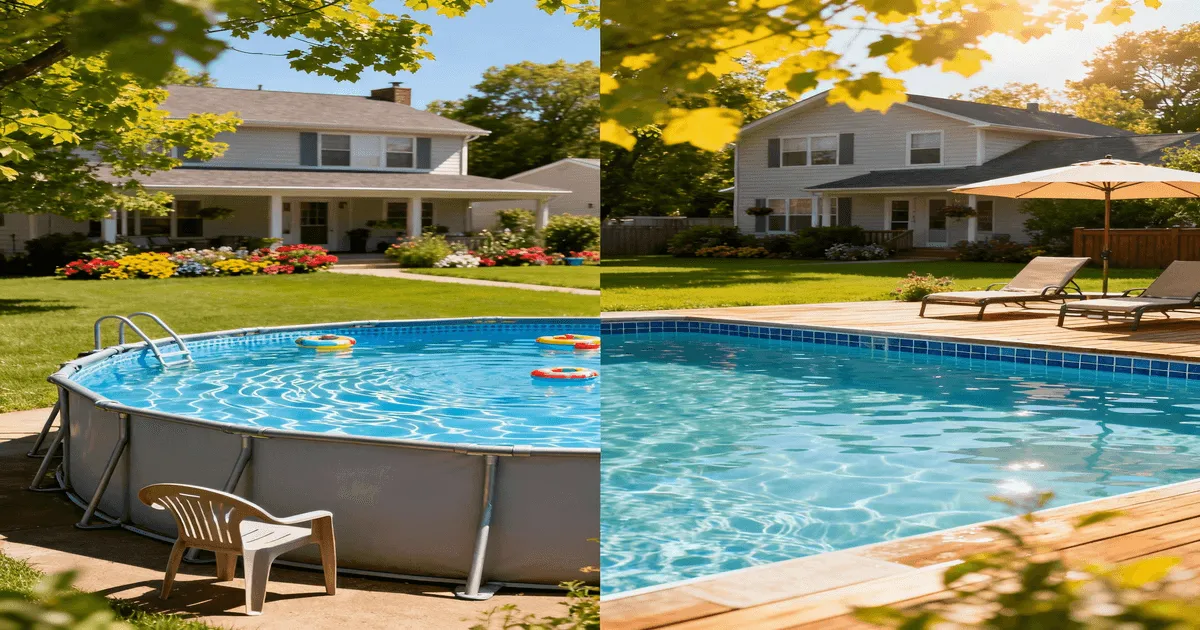
Choosing between an above-ground and in-ground pool is one of the most consequential decisions a homeowner makes in 2025. One offers speed and affordability; the other delivers permanence and luxury. But the “right” choice depends entirely on your budget, yard size, climate, and long-term goals.
In this detailed, data-driven comparison, we break down real 2025 costs, maintenance demands, resale impact, and ideal use cases for both types—so you can invest with confidence, not guesswork.
Key Differences at a Glance
| Factor | Above-Ground Pool | Inground Pool |
|---|---|---|
| Average Cost (2025) | $1,500 – $8,000 | $28,000 – $150,000+ |
| Installation Time | 1–3 days | 4–16 weeks |
| Lifespan | 7–15 years | 20–50+ years |
| Resale Value Impact | Neutral or slightly negative | Positive in warm states (FL, TX, AZ) |
| Maintenance Effort | Moderate (liner care, frame rust) | Moderate to high (depends on equipment) |
Above-Ground Pools: The Budget-Friendly Quick Start
Pros
- Low upfront cost: Full setup (pool + filter + ladder) often under $5,000.
- Fast installation: Ready to swim in a weekend.
- No permits required: In most U.S. counties (check local codes).
- Easy to remove: Ideal for renters or temporary setups.
Cons
- Limited design options: Round or oval only; no custom shapes.
- Shorter lifespan: Liners degrade in UV; frames rust over time.
- Safety concerns: Requires secure fencing (many states mandate it).
- Lower aesthetic value: Doesn’t blend into landscaping like in-ground pools.
Best For
- Families with tight budgets
- Renters or temporary homeowners
- Small yards with limited space
- First-time pool owners testing the waters
Above-Ground vs Inground Pools
Inground Pools: The Permanent Backyard Oasis
Pros
- Custom design: Freeform, rectangular, infinity edge—you name it.
- Higher property value: Adds 5–8% to home value in sunbelt states.
- Better integration: Can include spas, waterfalls, and tanning ledges.
- Long-term durability: Concrete pools last 30–50 years with resurfacing.
Cons
- High cost: Starts at $28K for basic vinyl; $75K+ for concrete with features.
- Long build time: Permits, excavation, and weather delays are common.
- Permitting complexity: Requires engineering plans in CA, FL, and TX.
- Higher maintenance: More surface area, complex equipment.
Best For
- Homeowners planning to stay 5+ years
- Those in warm climates (year-round use)
- Buyers seeking luxury and customization
- Families wanting a permanent entertainment space
2025 Cost Breakdown: What You’ll Really Pay
Above-Ground Pool (15’ Round)
- Pool kit (liner, frame, skimmer): $1,200 – $3,000
- Pump & filter: $200 – $500
- Ladder & safety fence: $150 – $400
- Ground prep (sand base): $100 – $300
- Total: $1,650 – $4,200
Inground Pool (14’x28’ Vinyl)
- Excavation & permits: $5,000 – $10,000
- Pool shell: $15,000 – $25,000
- Equipment (pump, filter, heater): $8,000 – $15,000
- Decking (basic concrete): $6,000 – $12,000
- Total: $34,000 – $62,000
💡 Pro Tip: In-ground pools benefit most from energy-efficient equipment. Pair yours with a variable-speed pump and smart automation to reduce long-term costs.
Maintenance Comparison: Time & Money
Above-Ground
- Weekly: Test water, skim debris, check liner for tears.
- Seasonal: Replace liner every 7–12 years ($300–$800).
- Biggest risk: Frame corrosion—rinse after heavy use.
Inground
- Weekly: Brush walls, vacuum, test chemistry.
- Annual: Professional inspection recommended.
- Biggest risk: Equipment failure—invest in quality from day one.
For saltwater inground pools, follow our 2025 maintenance checklist to protect your investment.
Climate & Yard Considerations
Small or Sloped Yards
Above-ground pools win—they require minimal space and no excavation.
Cold Climates (Northern U.S., Europe)
Both types need winterizing, but above-ground pools are more vulnerable to ice pressure. Learn the full process in our step-by-step winterizing guide.
Hot, Dry Climates (AZ, TX, Middle East)
In-ground concrete pools handle heat best. Above-ground liners can warp under intense sun.
Resale Value: Does It Help or Hurt?
- In warm states (FL, TX, CA): Inground pools add value—buyers expect them.
- In cold states (NY, MN), Pools may deter buyers who fear maintenance.
- Above-ground pools: Rarely add value; often seen as temporary.
Before building, read our full analysis: How Much Does It Really Cost to Build an In-Ground Pool in the USA?
Hybrid Option: Semi-Inground Pools
A growing trend in 2025: semi-inground pools (partially sunk into the ground). They offer:
- Better aesthetics than above-ground
- Lower cost than full inground
- Easier installation on sloped yards
However, they still require excavation and permits—so costs sit between the two.
Above-Ground vs Inground Pools
Frequently Asked Questions (FAQ)
Can I convert an above-ground to an in-ground?
Not safely. Above-ground walls aren’t designed for earth pressure. It’s a structural risk.
Which is better for kids?
Above-ground pools are safer (no diving, easy exit)—but always install a fence and alarm, regardless of type.
How long does an above-ground liner last?
7–12 years with proper care. Avoid sharp toys and unbalanced water chemistry.
Do inground pools require more chemicals?
Yes—larger volume = more chemicals. But smart systems like automation can optimize dosing and reduce waste.
Final Recommendation
Choose above-ground if you want to swim this summer with minimal cost and hassle.
Choose in-ground if you’re building a legacy backyard that enhances your lifestyle and property for decades.
At YAHYA STORE, we support both paths—with premium above-ground kits and in-ground-grade equipment like robotic cleaners, heaters, and filters trusted across the U.S. and Europe.
Whatever you choose, choose quality. Your pool should bring joy—not headaches.